If you’re in perimenopause and tired of being tired, read this.
The night sweats, the 3am wake-ups, the fog and the exhaustion all come from one place. Here is what it is, and what women are doing about it.


You know the moment.
It is 3am, and the sheet is soaked. You change your shirt in the dark. Later, a word goes missing halfway through a sentence. By 2pm you are tired from doing nothing. And the jeans that fit last spring will not close.
You already know what to call it. Perimenopause. Plenty of women you know are in it too, and the advice is always the same: it is a phase, ride it out.
And it is not wrong. It is just not the whole message.
Because a hot flash is only the part everyone can see. The rest tends to arrive all at once, and it rarely looks like a symptom. It looks like a bad night, a bad memory, a heavy afternoon, a tight waistband, and a feeling that you are not quite yourself.
There are six of them. Most women handle each one on its own: a fan for the nights, a coffee for the afternoons, a looser pair of jeans.
Here is what each one looks like.
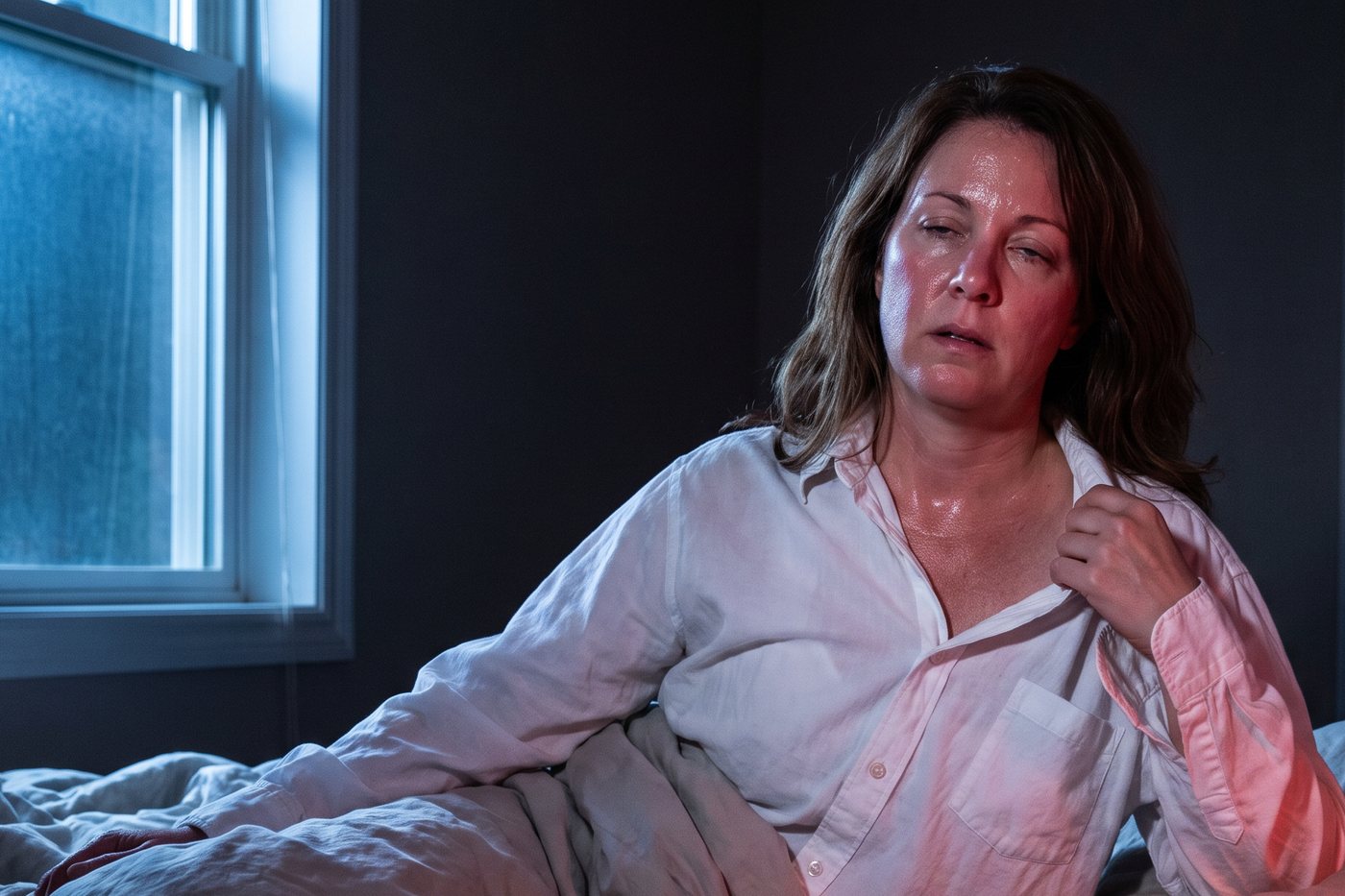
You woke up soaked, and changed your shirt in the dark
The sheet is damp. The pillow is damp. You peel the shirt off your skin and swap it for a dry one, trying not to wake anyone.
For a few minutes you are burning, and the covers go flying. Then, around four, you are cold, and you drag them back and lie there shivering in a damp bed.
Most women blame the room. The duvet is too thick, the heating is too high, the wine was a mistake. So they buy lighter pajamas, then a fan, then a cooling sheet.
All reasonable. But if you are still waking soaked with all three, the room may not be the whole story. Night sweats are one of the best-known signs of perimenopause, and they can show up on their own, with no daytime hot flash at all.
A spare shirt on the nightstand is not a sleep habit. It is evidence.
The coffee stopped working. You are tired from doing nothing.
Not tired like after a long day. Tired like something has been unplugged. You wake up already behind, and by 2pm the thing that used to get you through the afternoon does not.
A strange, flat, low-grade feeling, as if you are coming down with something. Every day. And you are not.
That is the cruel part, because you are doing everything right. You eat properly, take the vitamins, move when you can. You do not have a lazy bone in your body, and you are exhausted anyway.
It is not laziness, and it is not a lack of discipline. Fatigue is one of the most commonly reported signs of perimenopause, and it tends to travel with the broken sleep.
You are not lazy. You are running on a battery that is not charging.
You asked for “the whatsitcalled” and pointed at it
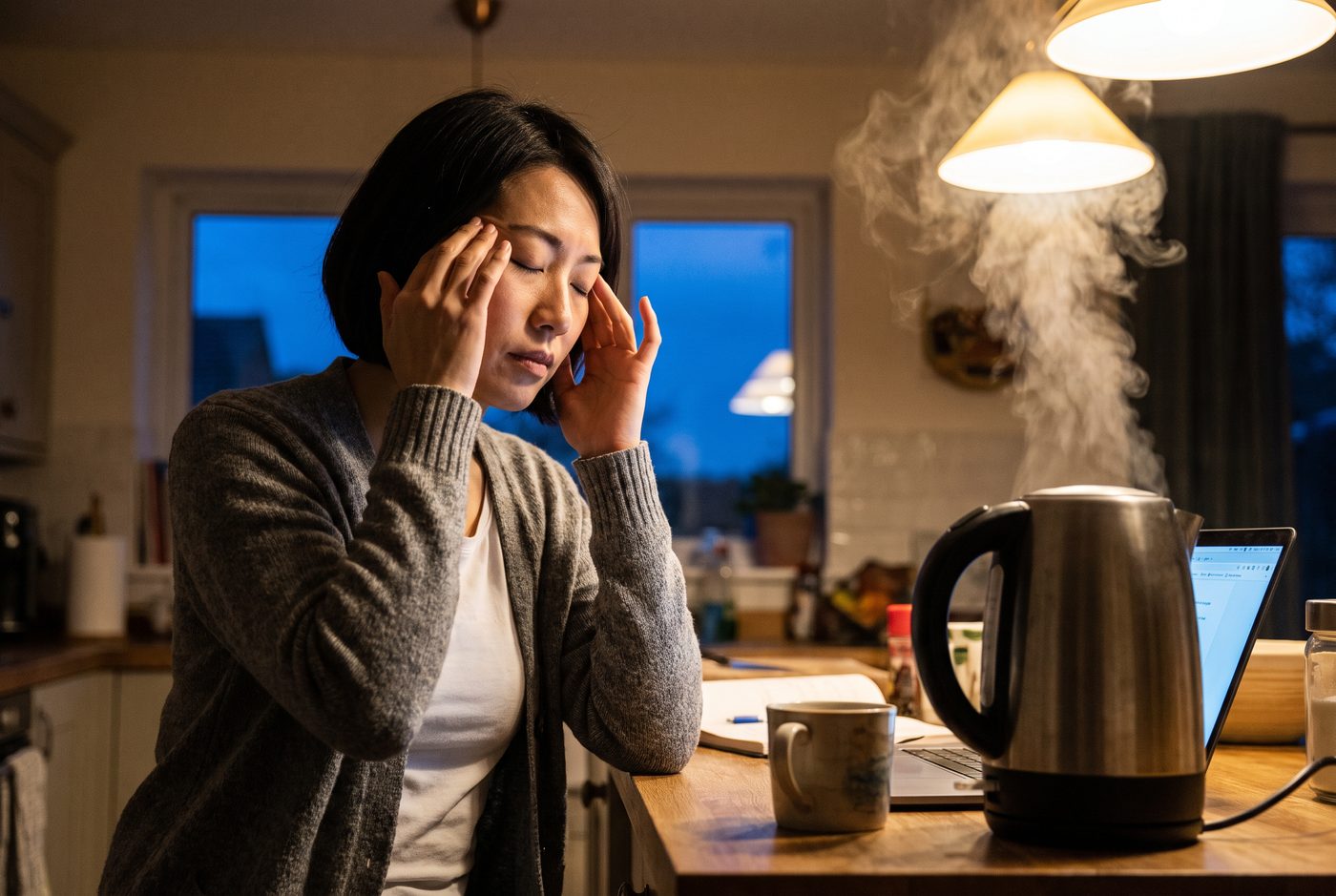
You know the word. You can see the thing. It is right there behind your teeth, and it will not come. So you point, and everyone knows what you mean, and everyone laughs, and you laugh too.
Then it happens in the meeting. A name gone. A thought gone halfway through the sentence. A mistake in an email you cannot even see. You walk into a room and stand there, wondering what you came for.
At some point the laugh stops being funny. Plenty of women spend months quietly wondering whether something is wrong, before anyone says the word hormones. Brain fog is one of the most common things women notice in perimenopause, and one of the most unsettling, because it feels like losing the one thing you have always relied on.
If memory ever worries you, tell your doctor. It is always worth saying out loud.
Foggy is not failing.
Short on time?
See the formula →You are wide awake at 3am. You used to be a great sleeper.
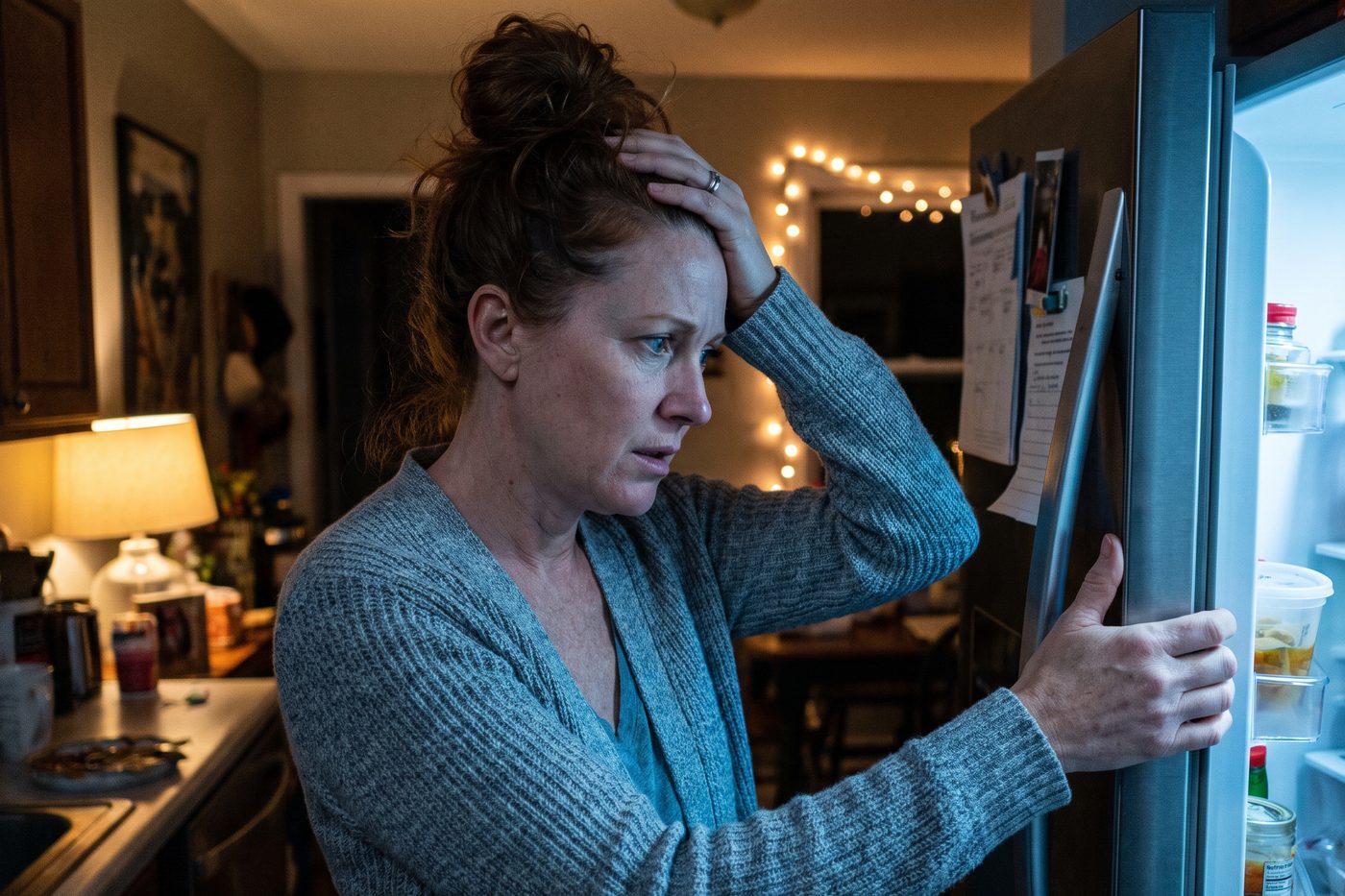
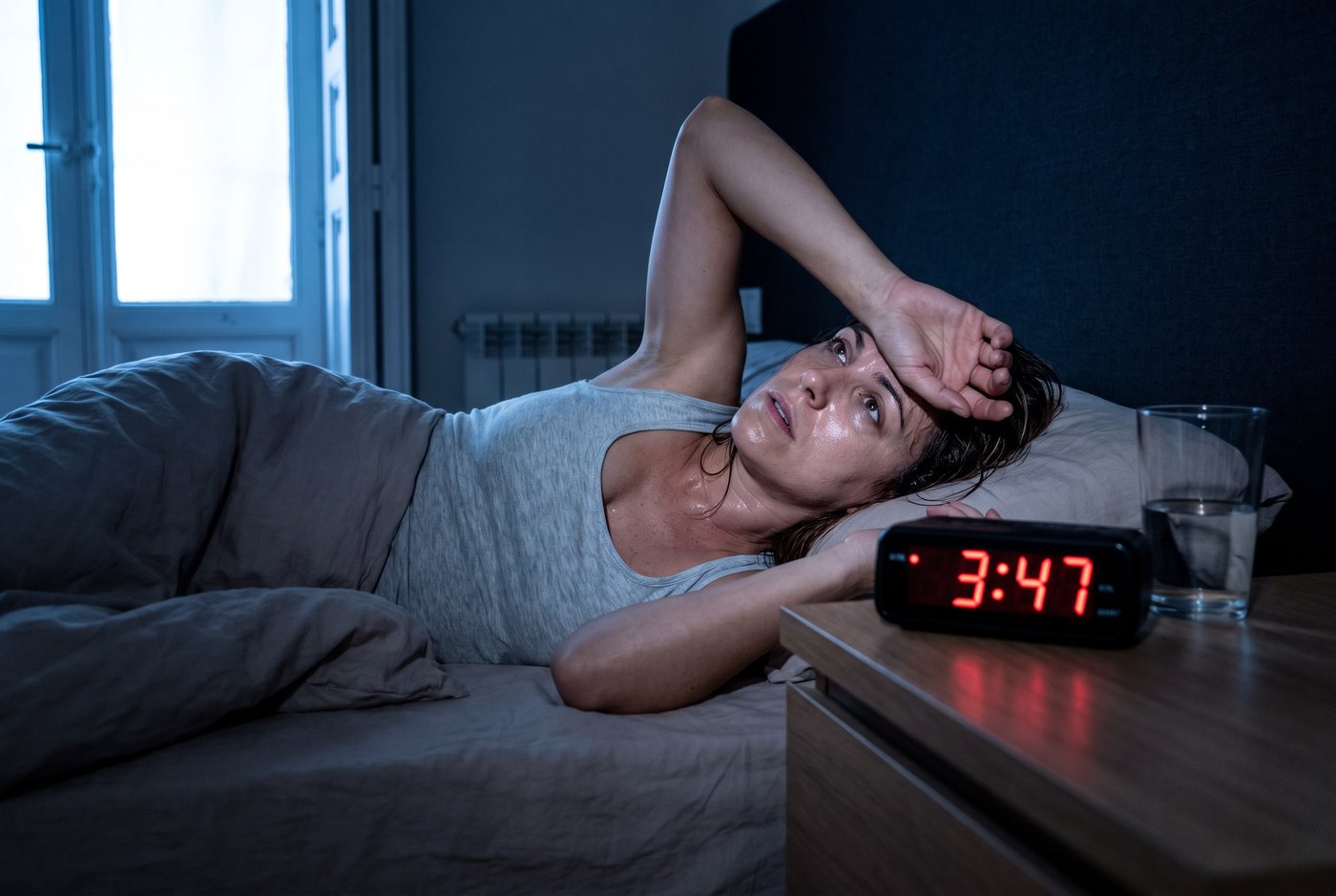
Falling asleep was never the problem. You used to be out in minutes. Now something wakes you around three, and your eyes simply open. Not from the heat this time. Just awake.
You lie there doing the math. If I fall asleep now, I get three hours. You check the clock anyway. Then you check it again. Your partner has stopped asking whether you slept.
It is easy to blame the coffee, or the screen, or getting older. But you did not turn into a bad sleeper. The same hormone swings that affect how hot you run reach your sleep too, with night sweats or without.
And one bad night feeds every other sign on this list. The fog is thicker. The afternoon is longer.
You did not forget how to sleep. Something keeps interrupting it.
Your jeans got tighter and your knees ache, and nothing changed
You eat the same. You move the same, maybe more. And the waistband is tighter than it was six months ago, with the weight settling around your middle in a way it never used to.
By mid-afternoon it digs in. You feel puffy after meals that never used to do that, and the button you did up this morning is a negotiation by four.
Then the mornings. Your hips, your knees, a shoulder, your feet all have a word first. It is easy to blame age, or the mattress.
And your period, if you still have one, has stopped following rules. Early, late, light, then a flood that catches you out.
One note, because it matters: very heavy bleeding, bleeding between periods or after sex, or any bleeding after menopause is worth a call to your doctor, whatever else is going on.
None of these looks like part of the same story. Weight, bloating, joints and periods each get their own explanation: age, diet, bad luck. Few women are told they can all belong to one transition.
Your body did not break. It changed the rules, and nobody sent you the new ones.

You canceled the plans, and the relief was the strangest part
It was dinner with a friend you love. Or a weekend you had been looking forward to. Then the day came, you looked at it, and you just did not have it in you.
Not upset, exactly. Many women say the same thing: I just do not want to do anything.
The things that used to light you up have gone quiet. The plans, the hobbies, the people. You would rather be home, in soft clothes, with your phone face down. Some women call it bed rot. It is funny, right up until the day it is not.
And underneath it, a small ache. You miss her. The woman who said yes, who made the plan, who laughed in the kitchen. You do not recognize this quieter version of yourself, and you are not sure where she went.
It is one of the most common things women describe, and one of the least talked about, because from the outside it does not look like a problem. You are still showing up. You are just doing it on fumes.
If it ever feels heavier than tired, talk to your doctor.
She did not leave. She is running on empty.
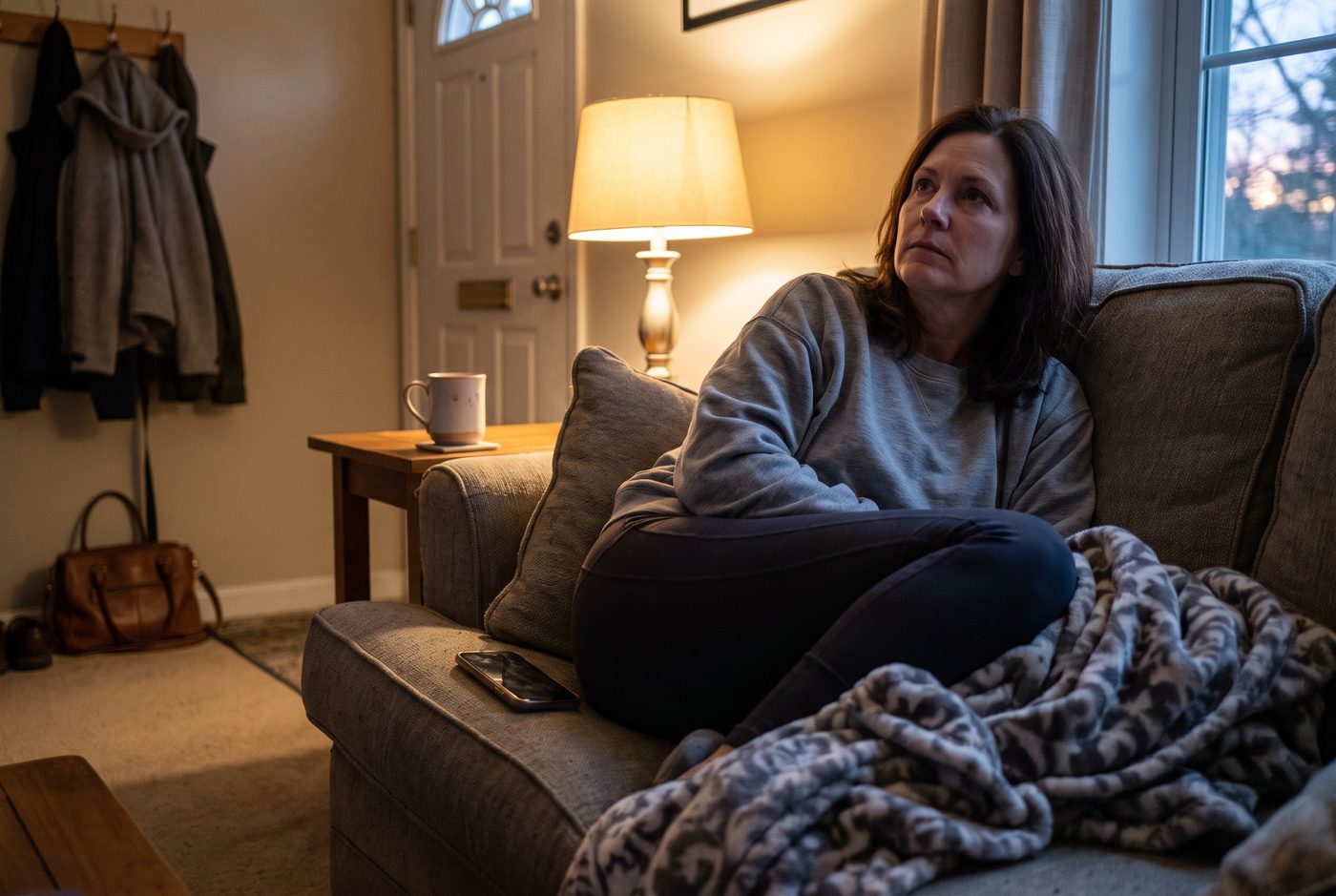
So how many are you living with?
Count the ones you recognized.
Welcome to perimenopause bingo. You are not being dramatic, and you are not alone. This is what the transition looks like when it shows up in more than one place at once, and it is worth taking to your doctor, with a few weeks of notes.
Some of both. A middle score is easy to dismiss, which is how so much of this gets filed under “just getting older.” Write it down anyway. Patterns show up in notes.
Then you may be early in it, or one of the lucky ones. Worth reading on anyway, because one idea ties these six together, and it explains a lot of what your friends are going through.
You are in very good company. In a 2026 survey of more than 12,000 women aged 35 and over, 83% reported fatigue and 76% sleep problems.
Source: Hedges et al., Menopause, 2026, published by The Menopause Society. A digital survey of Flo app users in 158 countries; figures are for the 12,681 respondents aged 35 and over. Self-reported.
None of this is a diagnosis. These are common experiences, and a doctor is the right person to ask.
Which brings us to the part that actually matters.
Night sweats, the fog and the 3am wake-ups are not six problems. They are one.
Most advice about perimenopause sends you off in six directions. A fan for the nights. A planner for the fog. Coffee for the afternoons. Looser jeans for the rest.
That split has never really made sense, and here is why.
In perimenopause, hormone levels do not fall in a straight line. That is the picture most of us carry: a slow, steady slope downward over the years, like a tide going out.
The reality is messier. Levels swing. Higher than expected one week, lower the next, then high again. Some weeks you barely notice. Some weeks you are soaked at 3am and cannot find the word for the thing in your hand.
And everything that takes its cues from those hormones rides the swings with them. Your internal thermostat. Sleep. Energy. Focus. Digestion. When the levels move, all of them can move with them.

You can plan around a slope. You cannot plan around a swing.
That is why it feels so random: a hot night, a day of fog, a week of bloating. This is the general picture, and every woman’s version of it looks different. But night sweats, the fog, the tiredness and the 3am wake-ups are not six problems with six answers. They are one transition showing up six ways: hormone levels swinging, and everything that listens to them swinging along. Which is why “is it my sleep, my energy or my brain?” was always the wrong question.
The useful question is what is changing underneath.
Why nothing you have tried has fixed it
Here is the part that changes how you think about your bathroom shelf.
You did the sensible thing and went at it one symptom at a time. A fan for the nights. Coffee for the fatigue. A planner for the fog.
Every one of those is a fix for a single sign. Some help a little, for a while, and that is real. But they approach the six as six separate problems, and they never were.
You have not been failing to fix it. You have been fixing six things instead of one.
And then there was the appointment. Maybe you finally said it out loud: I do not feel like myself. And you heard one of the usual lines. You are too young. Your labs are normal. It is probably stress. Try to get more sleep.
You are far from alone. In a 2026 survey of 1,493 US women who describe themselves as perimenopausal, 53% felt their symptoms had been dismissed or not taken seriously.
Source: Flo Health, “Make Dismissal History” survey, 2026, of 1,493 US Flo users who report being perimenopausal. Self-reported.
None of that is a reason to stop asking. Keep notes. Ask your doctor to rule out the usual lookalikes, like iron, thyroid and B12. A normal blood test on one day cannot cancel out how you feel on every other. And if yours will not listen, you are allowed to find one who will.
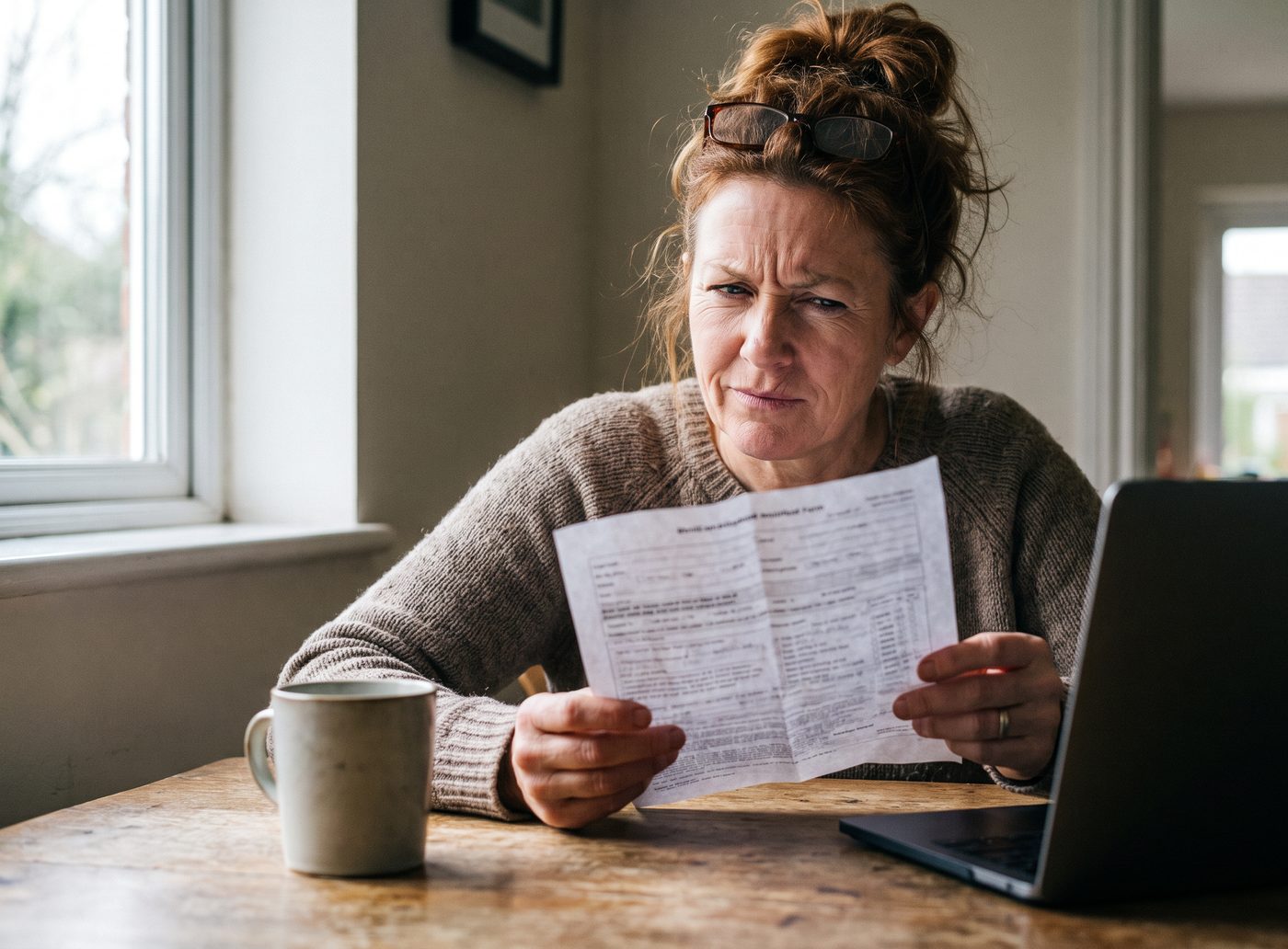
Which is why some women look for something that supports the whole picture, every day, alongside everything else they already do. Their doctor included.
What that means in practice
Which is the thinking behind EVURA. Not a hormone, not a drug. Eleven all-natural botanicals in two capsules a day, with every dose printed on the label: daily hormonal support* for women in perimenopause. Deeper sleep, fewer night sweats, steadier energy, a clearer head and calmer days.*
Eleven rather than one, because these six are not one symptom. A single herb at a single dose is a bet on a single thing. Sage and black cohosh are in there for the heat and the nights, chasteberry for cycle support, and eight more fill out the rest.*
It contains no hormones, and it is not a replacement for hormone therapy. If hormone therapy is right for you, that is a conversation for you and your doctor. But plenty of women cannot take it, would rather not, or want something alongside it, and that is who this is for. It does contain plant phytoestrogens from soy and red clover, so if you take any medication, are on hormone therapy, or have an estrogen-sensitive condition, ask your doctor before you start.
Not just one herb. That is the entire idea.

All-natural. Eleven botanicals. Two capsules a day.
See what is inside →Eleven herbs, formulated for women in perimenopause
All-natural, every one of them. Eleven herbs and botanicals, brought together as one formula for women in perimenopause, instead of eleven separate bottles on the bathroom shelf.
Every dose is on the label. Black cohosh 160 mg. Sage 200 mg. Red clover 400 mg. Dong quai 150 mg. Licorice 150 mg. Chasteberry 50 mg. And five more, for 1,256 mg of botanicals in every serving. You can read exactly what you are taking.
A fair ninety days. Botanicals build gradually, so we ask you to give it three months, and we back it with a guarantee.
Cancel anytime. One click, whenever you like.
Every dose on the label. Read it for yourself.
What actually happens, and when
Here is the honest version, because you have been promised things before.
Ninety days is about three cycles. It is the shortest honest test there is.
See the 90-day plan →Some women notice their nights first. Judge it at day ninety.*

The reason we say ninety days rather than thirty is not a sales tactic. It is that botanicals build gradually, and one month is not a fair read of a body whose cycle changes from month to month. Ninety days gives you several to compare.
And if it does not work
Ninety days, and if you do not feel the difference, you get your money back. Finish the ninety days, email us, and we refund the purchase. There is no bottle to send back. And if you would rather not carry on, you cancel in one click, any time.
It is a straightforward offer to make, because it is the same ninety days it takes to find out either way.
Perimenopause was never just hot flashes.
Underneath the part everyone can see, the same swings are behind six things. The night sweats. The fog. The 3am wake-ups. The tired. And somewhere in there, a sentence you may have said to no one: I do not recognize myself.
You are not imagining it, and you are not alone. You are in a transition nobody explained, and you are allowed to want calm, steady days and to feel like yourself again.
The hot flash was only ever the first one.

Ninety days to feel like you again.*
Eleven all-natural botanicals, two capsules a day, and ninety days to find out.
Start your 90 days →90-day money-back guarantee · free shipping on subscriptions
